
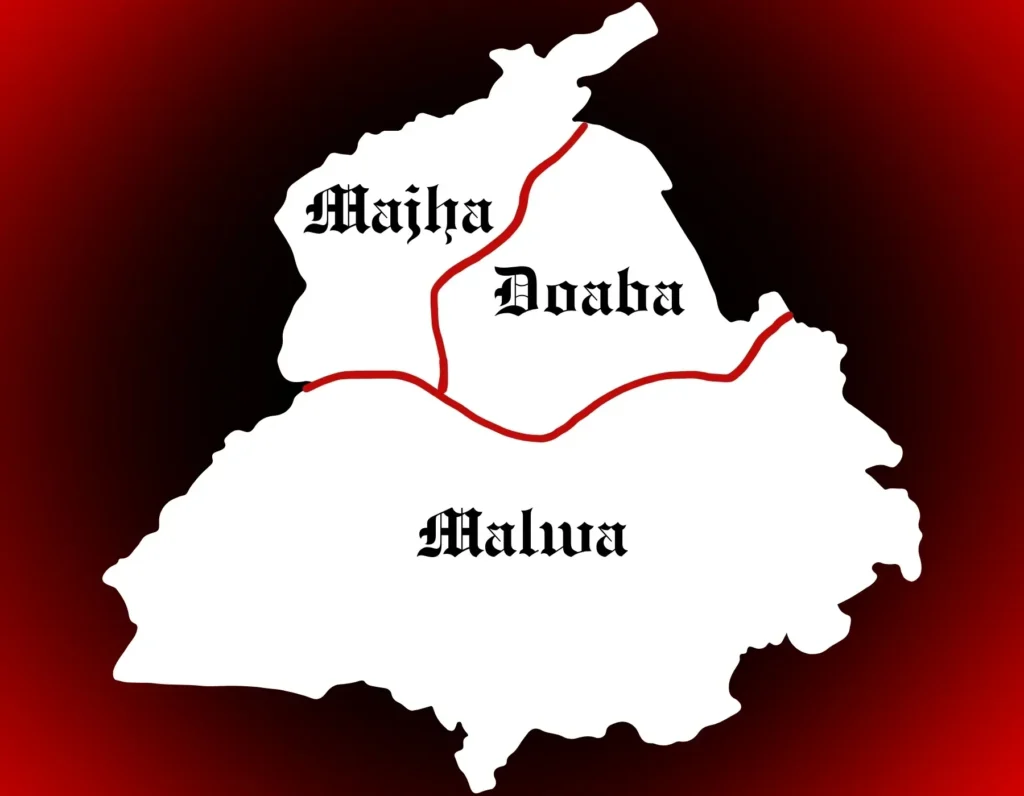
Punjab is often described as one land with one culture, but anyone who truly knows Punjab understands that it has three strong regional identities—Majha, Doaba, and Malwa. These regions developed over centuries due to geography, history, political rule, migration, and language. They are not divisions of Punjab; they are expressions of Punjab.
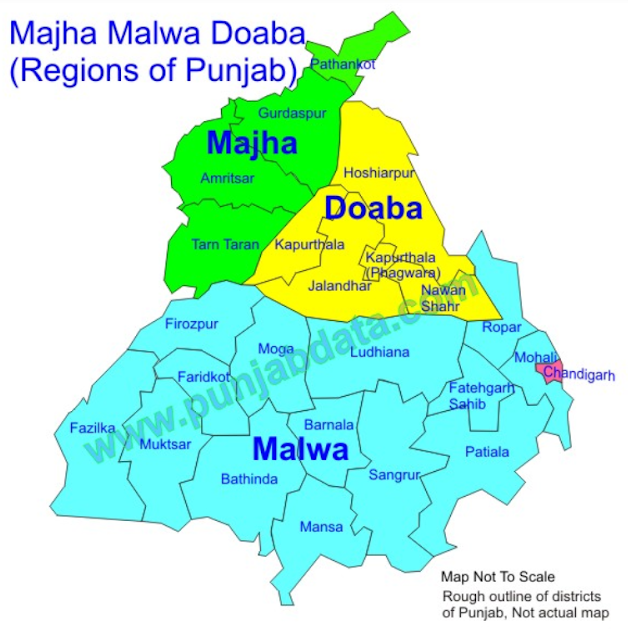
Majha Region: History, Sikh Heritage & Majhi Punjabi
Majha holds a special place in Punjab’s collective memory. It includes Amritsar, Tarn Taran, Gurdaspur, Pathankot, and Batala. Historically, it was the most influential region of undivided Punjab and included Lahore before Partition.
The Majhi dialect spoken here is considered the standard form of Punjabi. It is used in textbooks, formal writing, and Sikh scriptures. This makes Majha extremely important for students studying Punjabi language and literature.
Majha is also the spiritual centre of Sikhism. The presence of the Golden Temple shaped Sikh philosophy, politics, and community life. Many key Sikh historical events, including the rise of the Sikh Misls and resistance against Mughal rule, took place in this region.
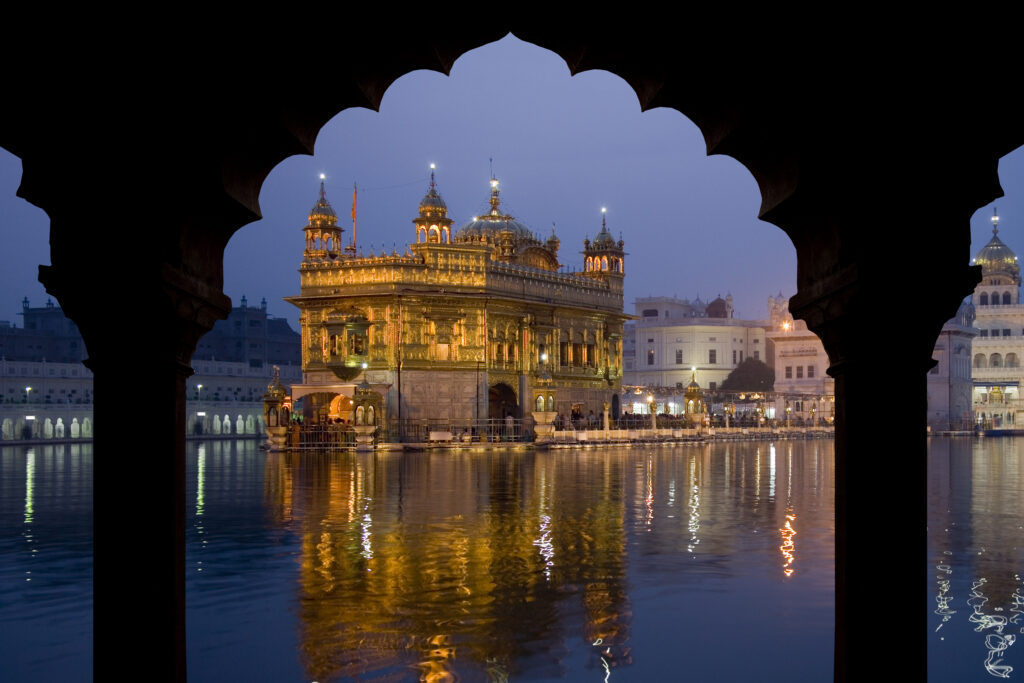
Culturally, Majha values discipline, tradition, and history. Festivals like Gurpurabs are observed with deep religious awareness, and community service (seva) remains central.
Food from Majha reflects its urban and historical character. Amritsari kulcha, thick lassi, and tandoori dishes are famous across India. Even today, Majha balances spirituality with modern tourism, cafés, and border-area nationalism.
Doaba Region: Migration, Education & Global Influence
Doaba includes Jalandhar, Hoshiarpur, Kapurthala, and Shaheed Bhagat Singh Nagar. Though smaller in size, Doaba has had a big influence on Punjab’s social structure.
The Doabi dialect is softer and often includes English or Hindi words. This reflects the region’s long history of overseas migration. Doaba has the highest number of NRIs in Punjab, especially in the UK, Canada, and Europe.
Migration changed village life dramatically. Remittances improved infrastructure, education levels increased, and exposure to foreign cultures became common. At the same time, migration also brought social challenges like ageing parents and cultural gaps.
Economically, Doaba is strong in both agriculture and industry. Fertile land supports sugarcane and vegetables, while Jalandhar became India’s sports goods manufacturing hub.
Doaba’s food culture is simple and home-based—lighter sarson da saag, choley, and seasonal produce. Doaba represents Punjab’s adaptive and outward-looking identity.
Malwa Region: Agriculture, Politics & Punjabi Mass Culture
Malwa is Punjab’s largest region and the most powerful in present-day politics. It includes Ludhiana, Patiala, Bathinda, Sangrur, Mansa, Ferozepur, and surrounding districts.
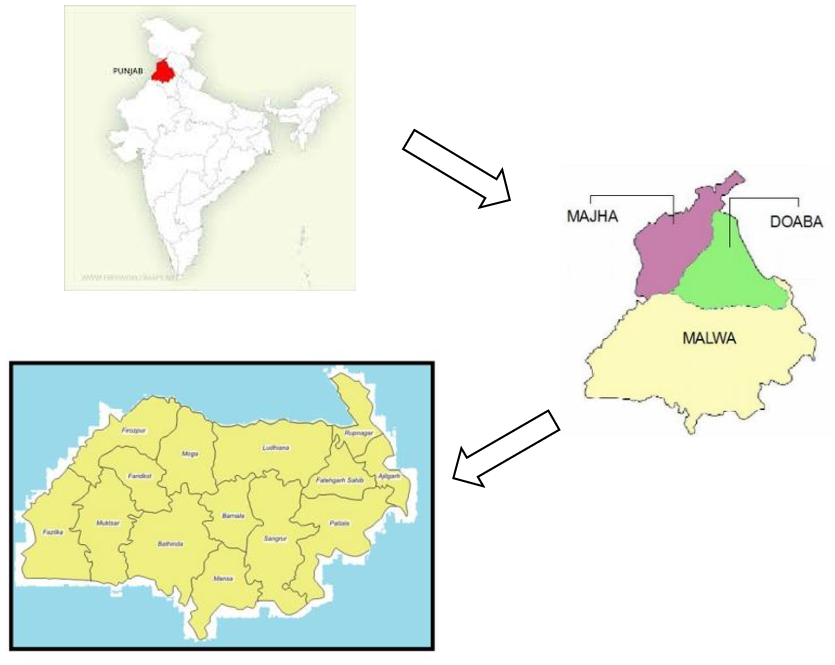
The Malwai dialect is the most widely spoken today and dominates Punjabi music, cinema, and folk expression. Most popular Punjabi songs and films use Malwai, making it the voice of contemporary Punjab.
Malwa was the centre of the Green Revolution, transforming Punjab into India’s food supplier. Wheat and rice cultivation, mechanised farming, and canal irrigation define the region. Ludhiana also grew into a major industrial city.
Politically, Malwa holds decisive influence due to its population size and agricultural base. Most farmer movements and political shifts originate here.
Malwa’s food is rich and energetic—Bathinda lassi, pinni, and makki di roti reflect a hard-working rural lifestyle. Malwa represents Punjab’s strength, scale, and mass culture.
Puadh/Powadh
Puadh, the lesser-known fourth area of Punjab, lies between the Sutlej and Ghaggar rivers in the Shivalik foothills, encompassing Rupnagar (Ropar) and Sahibzada Ajit Singh Nagar (Mohali)districts. Frequently eclipsed by Majha, Doaba, and Malwa, Puadh features a unique Puadhi dialect—35% of Gurbani incorporates Puadhi terms, including the Khalsa greeting “Vaheguru ji ka Khalsa, Vaheguru ji ki Fateh” introduced by Guru Gobind Singh in 1699.
Historically abundant in Sikh landmarks such as Anandpur Sahib and Chamkaur Sahib, Puadh was previously verdant with mango groves and seasonal streams, recognized for wheat and sugarcane cultivation. Culturally distinctive, Puadhi individuals don kurta-pyjama (unlike Malwa’s chadara), style turla-style turbans in a different manner, and uphold unique traditions. Chandigarh was formed from 22 Puadhi villages, but does not have Puadhi names.
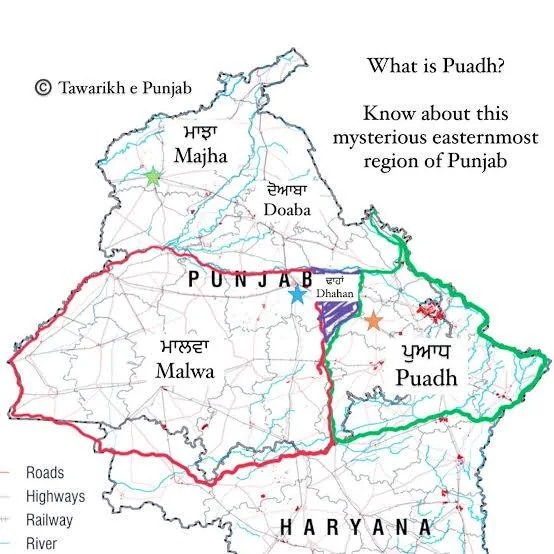
Politically overlooked yet rapidly urbanizing owing to its closeness to Chandigarh Tricity, Puadh merges rural traditions with IT and agricultural development—ideal
Majha vs Doaba vs Malwa:
| Feature | Majha | Doaba | Malwa |
|---|---|---|---|
| Rivers | Ravi-Beas | Beas-Sutlej | South Sutlej |
| Area | 8,100 sq km | 13,000 sq km | 25,000+ sq km |
| Population | 6M | 5.5M | 15M |
| Dialect | Majhi (standard) | Doabi (soft) | Malwai (music) |
| Economy | Tourism/services | NRI/sports | Agri/textiles |
| Key Crop | Wheat/rice | Sugarcane | Wheat bowl |
| Famous Food | Kulcha, lassi | Light saag | Pinni, thick lassi |
| Tourist Spot | Golden Temple | Jalandhar factories | Qila Mubarak |
| Exam Fact | Sikh history | Migration hub | Green Revolution |
Punjab’s strength lies in this balance. Majha preserves history, Doaba connects the world, and Malwa feeds and governs the state.
Historical Context
Pre-1947 Partition, Majha included Lahore-Sialkot (Pakistan). Muslims left Doaba-Majha; Sikhs/Hindus came from Lyallpur. Green Revolution (1966) transformed Malwa into India’s wheat bowl.
Majha History Timeline
- 1577: Guru Arjan builds Harmandir Sahib (Amritsar)
- 1700s: 4/5 Taruna Dal Sikh Misls based here
- 1799: Maharaja Ranjit Singh rules from Lahore (Majha)
- 1919: Jallianwala Bagh massacre (Amritsar)
- 1947: Partition splits historic Majha
Doaba History Highlights
- 1500s: Guru Nanak at Sultanpur Lodhi (Kapurthala)
- 1600s: Guru Arjan founds Kartarpur
- 1900s: First Sikhs migrate to Canada (Doaba start)
- 1947: Muslim Arain population leaves for Pakistan
Malwa History Timeline
- 1710: Banda Singh Bahadur destroys Sirhind (revenge for Guru’s sons)
- 1800s: Sikh Empire controls Ferozepur, Rupnagar
- 1966: Green Revolution begins (Malwa core)
- 2020s: Farmers’ protests epicenter
Punjab’s District : Majha, Malwa, Doaba, Puadh
Punjab has 23 districts total.
Majha Region (4 Districts)
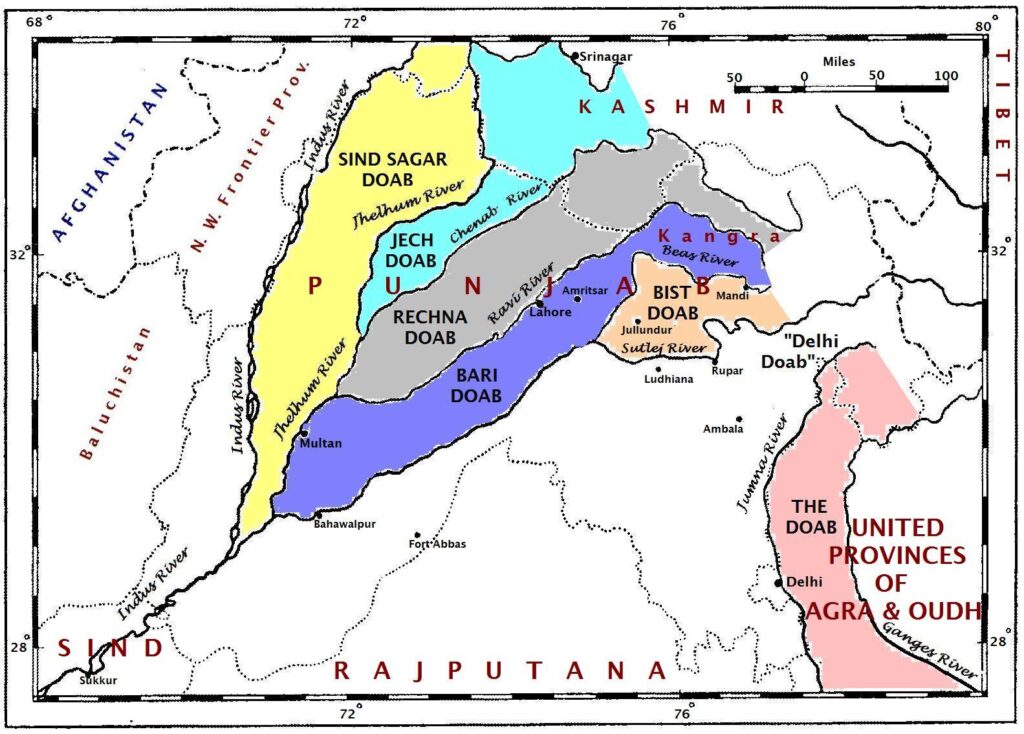
Core Majha – Between Ravi & Beas rivers:
- Amritsar
- Tarn Taran
- Gurdaspur
- Pathankot
Total: 4 districts | Area: 8,100 sq km | Key fact: Sikh history
Doaba Region (4 Districts)
Bist Doab – Between Beas & Sutlej rivers:
- Jalandhar
- Hoshiarpur
- Kapurthala
- Shaheed Bhagat Singh Nagar (Nawanshahr)
Total: 4 districts | Area: 13,000 sq km | Key fact: NRI + sports goods
Malwa Region (13 Districts)
Largest region – South of Sutlej river:
- Bathinda
- Mansa
- Muktsar Sahib
- Faridkot
- Ferozepur
- Fazilka
- Moga
- Ludhiana
- Patiala
- Sangrur
- Barnala
- Malerkotla (newest, carved from Sangrur 2021)
- Fatehgarh Sahib
Total: 13 districts | Area: 25,000+ sq km | Key fact: 70+ assembly seats, decides Punjab
Puadh/Powadh Region (2 Districts)
Shivalik foothills – Between Sutlej & Ghaggar/Yamuna:
- Rupnagar (Ropar)
- Sahibzada Ajit Singh Nagar (Mohali/SAS Nagar)
Chandigarh Status (Special Case)
Union Territory – Not counted in Punjab’s 23 districts but culturally Puadh/Chandigarh region.
Quick Reference Table
| Region | District Count | District Names | % of Punjab Seats |
|---|---|---|---|
| Majha | 4 | Amritsar, Tarn Taran, Gurdaspur, Pathankot | 15% |
| Doaba | 4 | Jalandhar, Hoshiarpur, Kapurthala, SBS Nagar | 15% |
| Malwa | 13 | Bathinda, Mansa, Muktsar, Faridkot, Ferozepur, Fazilka, Moga, Ludhiana, Patiala, Sangrur, Barnala, Malerkotla, Fatehgarh Sahib | 65% |
| Puadh | 2 | Rupnagar, SAS Nagar (Mohali) | 5% |
| Total | 23 | 100% (117 seats) |
- Malwa dominates: 13/23 districts = political powerhouse
- Puadh often debated: Some include Fatehgarh Sahib/Ludhiana parts in Malwa
If you really want to understand Punjab, don’t start with districts or politics—start with rivers. Long before modern maps existed, life in Punjab flowed with the Ravi River, the Beas River, and the mighty Sutlej River. These rivers quietly divided the land, and over centuries, they shaped people, language, food, farming, and even attitudes.
FAQ Section
1.What are the three main regions of Punjab?
Punjab is divided into three major cultural regions: Majha, Doaba, and Malwa. These regions developed due to historical settlement patterns, dialect differences, agriculture, and political influence.
2.What is the difference between Majha, Malwa, and Doaba?
Majha is the historical and spiritual centre of Punjab, Doaba is known for overseas migration and education, and Malwa is the largest region, dominating agriculture, politics, and Punjabi popular culture.
3.Which Punjabi dialect is considered the standard language?
The Majhi dialect, spoken mainly in the Majha region, is considered the standard form of Punjabi and is used in textbooks, literature, and Sikh scriptures.
4.Why is Doaba called the NRI hub of Punjab?
Doaba has the highest number of overseas migrants from Punjab, especially to the UK, Canada, and Europe. Migration from this region started during the British period and continues today.
5.Which region of Punjab is known as the wheat bowl?
The Malwa region is known as the wheat bowl of Punjab because it was the core area of the Green Revolution and produces a large share of Punjab’s wheat and rice.
6.Is Powadh a separate region of Punjab?
Powadh (or Puadh) is a linguistic sub-region, mainly around Patiala and Mohali. It is generally considered part of the Malwa region and not a separate official region