
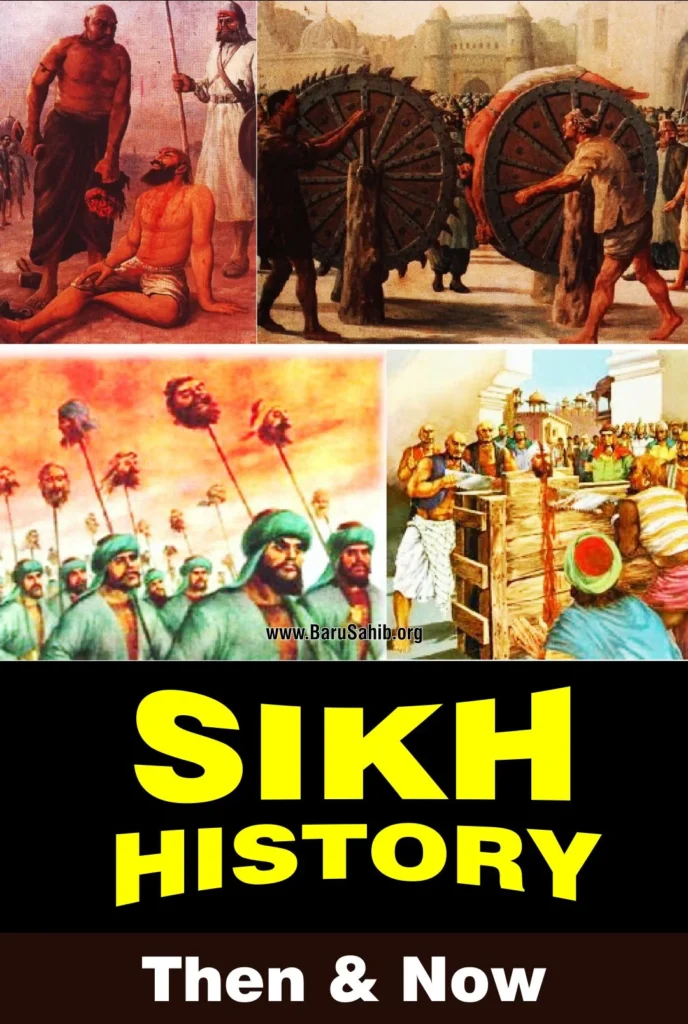
Sikh history is a grand narrative of belief,justice,courage, and assisting others. Emerging during India’s challenging era of religious conflicts and oppressive regulations in the Punjab area, Sikhism developed as a movement advocating for equality, justice, and altruistic service. Envision a belief system that rejects caste divisions,meaningless ceremonies, and animosity— that’s Sikhism right from the beginning.
This approachable,incremental manual takes you through everything—from Guru Nanak’s birth in the 1400s to the thriving global presence of Sikhs today. We will discuss the timeline of Sikh Gurus, the establishment of the Khalsa, the glorious empire of Punjab, and contemporary heroes. Filled with narratives, sayings, and Punjab pride, it’s accessible for novices yet substantial for history enthusiasts. Let’s explore this motivating journey through the history of Punjab Sikhs
The World Before Sikhism: Chaos in Punjab and Beyond
Envision northern India, especially Punjab, in the late 15th century. The society was in turmoil. The caste system restricted millions—Brahmins at the top, while Dalits suffered at the bottom. Hindu rituals included bathing in rivers or worshipping idols, yet many viewed these acts as superficial, lacking genuine significance. As for women? They were married off young, without any say in the matter.
Then came the Muslim rulers: the Delhi Sultanate (1206-1526) succeeded by the Mughals. The Lodis and early Mughal leaders like Babur invaded Punjab repeatedly, imposing heavy taxes on farmers and forcing conversions. Temples were destroyed, and jizya was levied on non-Muslims—tensions rose. The fertile lands of Punjab were marred by conflict; villagers hid in fear.
An intriguing fact: Punjab means “land of five rivers,” yet those rivers ran red with violence. The common folk, especially the lower castes in Punjab such as Jats and artisans, yearned for change. They had no allies—until Guru Nanak appeared.
Sikhism arose like a beacon of hope: One God (Ik Onkar), equality for all, and no need for priests. It united Hindus, Muslims, the affluent, and the destitute. This faith, originating in Punjab, would bring down empires.
Guru Nanak Dev Ji
Guru Nanak was born on April 15, 1469, in Talwandi, which is now known as Nankana Sahib in Pakistan. He was the son of trader Mehta Kalu and Mata Tripta, and he spent his childhood in the rural region of Punjab. As a young boy, he often chose to engage in debates with mullahs and pandits rather than participate in cattle herding. At the age of 12, during a solar eclipse ritual, he posed a thought-provoking question: “If God is everywhere, why this bath?” This statement left the elders astonished.
According to legend, at the age of 30, Guru Nanak meditated by the Bein River and mysteriously disappeared for three days. Upon his return, he was radiant and proclaimed, “No Hindu, no Muslim!” His initial declaration was, “There is no Hindu, there is no Muslim,” which encapsulates the essence of Sikhism—unity.
He established his Simple Golden Rules, known as the 3 Pillars:
Naam Japo: Engage in daily meditation on God, akin to recharging the battery of your soul.
Kirat Karo: Commit to hard work and earn honestly, avoiding deceitful practices.
Vand Chhako: Contribute 10% of your earnings to others, a practice that initiated the concept of langar.
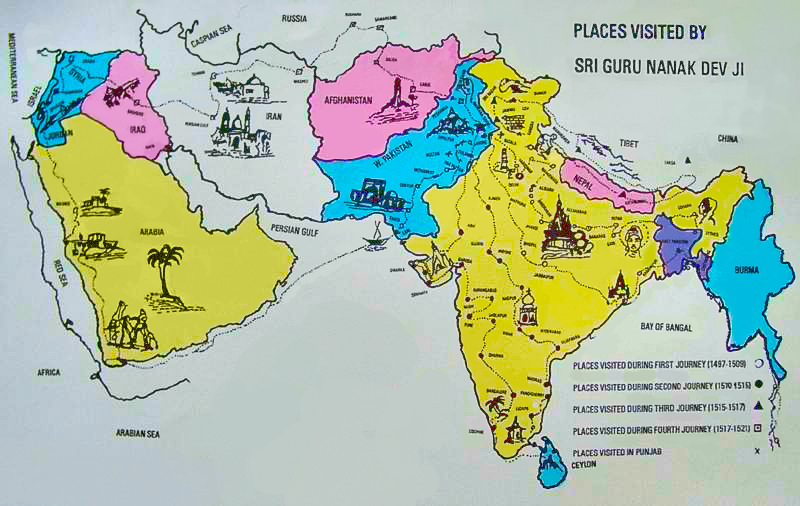
Guru Nanak undertook four significant Udasis (travels) covering a distance of 28,000 kilometers: he visited the Himalayas where he met yogis, traveled to South India to debate at temples, journeyed to Ceylon, and went to Mecca where he corrected the direction of the qibla. In Saidpur (Eminabad), he worked in a Muslim shop, ensuring that wages were shared equally among workers.
He authored 974 hymns (shabads) set to ragas, which are both poetic and musical in nature. Guru Nanak passed away in 1539 in Kartarpur, Punjab, where a dispute arose between Hindus and Muslims regarding his funeral rites. This contention was resolved when flowers began to rain down, and the bodies vanished. He is famously quoted as saying, “Truth is high, but higher still is truthful living.”
His companion, Bhai Mardana, played the rabab, marking him as the first musician in Sikh history!
The Sikh Gurus
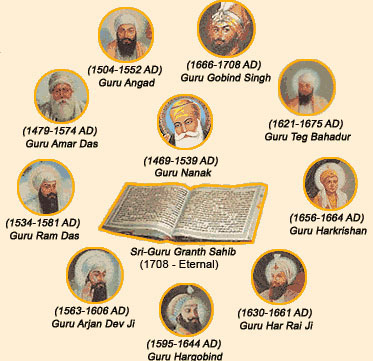
Guru Nanak selected his successors through a ritual involving a coconut and five paisas, symbolizing the spiritual transmission of leadership. Each Guru expanded upon the teachings of his predecessor, transforming followers—referred to as Sikhs, meaning “learners”—into a cohesive community known as the Panth.
Detailed Sikh Gurus Timeline:
Guru Angad (1539-1552):
Guru Angad, who was originally known as Bhai Lehna, was selected by Guru Nanak due to his humility and selfless service. He fortified Sikh institutions and provided Sikhism with a unique identity by creating the Gurmukhi script, which facilitated the spread of literacy among the populace. He broadened the practice of Langar (the free community kitchen) and placed a strong emphasis on discipline, physical fitness, and education. His leadership guaranteed continuity and stability following Guru Nanak.
Guru Amar Das (1479–1574)
Guru Amar Das significantly organized and expanded Sikhism. He ardently advocated for social reforms, including the equality of women, the prohibition of Sati, and the rejection of caste discrimination. He mandated Langar for anyone wishing to meet the Guru, thereby reinforcing the principle of equality. He established preaching centers (Manjis) throughout India and composed numerous hymns, including Anand Sahib, which was later incorporated into the Guru Granth Sahib.
Guru Ram Das (1534–1581)
Guru Ram Das established the city of Ramdaspur, which later became known as Amritsar, the spiritual hub of Sikhism. He authored the Laavaan, the hymns recited during Sikh marriage ceremonies. Additionally, he laid the foundation for the Harmandir Sahib (Golden Temple). His leadership further organized Sikh society and enhanced its spiritual practices.
Guru Arjan (1563–1606)
Guru Arjan finalized the construction of the Harmandir Sahib and compiled the Adi Granth, which is recognized as the first official scripture of Sikhism. He incorporated hymns from Sikh Gurus alongside those of saints from various backgrounds, showcasing a spirit of inclusivity. He was the inaugural Sikh Guru to be martyred, executed by Mughal emperor Jahangir, thereby establishing a profound example of sacrifice for faith and justice.
Guru Hargobind (1595–1644)
Guru Hargobind introduced the dual concepts of Miri and Piri, which symbolize temporal (political) and spiritual authority. He organized the Sikh community for self-defense and founded the Akal Takht, the center of Sikh temporal power. Under his guidance, Sikhs evolved into both spiritual leaders and warriors, prepared to defend justice and freedom.
Guru Har Rai (1630–1661)
Guru Har Rai prioritized compassion, environmental stewardship, and peaceful coexistence while sustaining a defensive Sikh force. He refrained from engaging in direct confrontations with the Mughal Empire but steadfastly upheld Sikh values. Renowned for his kindness and empathy towards all living beings, he entrusted the Guruship to his young son, Guru Har Krishan.
Guru Har Krishan (1656–1664)
Guru Har Krishan ascended to the Guruship at the tender age of five and is celebrated for his wisdom, humility, and dedication to service. During a smallpox outbreak in Delhi, he provided care for the afflicted, resulting in many recoveries. He passed away at a very young age and, prior to his death, designated Guru Tegh Bahadur as his successor.
Guru Tegh Bahadur (1621–1675)
Guru Tegh Bahadur laid down his life to safeguard religious freedom, particularly advocating for the rights of Kashmiri Hindus who were subjected to forced conversions under Aurangzeb. His execution in Delhi rendered him a symbol of martyrdom for human rights and the freedom of belief. His sacrifice represented a pivotal moment, leading to a more militarized Sikh identity.
Guru Gobind Singh (1666–1708)
Guru Gobind Singh founded the Khalsa Panth in 1699, giving Sikhs a distinct identity based on equality, courage, and discipline. He introduced the Five Ks and emphasized readiness to stand against injustice. Before his death, he ended the line of human Gurus and declared the Guru Granth Sahib as the eternal spiritual authority of Sikhism, ensuring unity and continuity.
Guru Granth Sahib Ji
Guru Arjan’s Adi Granth, completed in 1604, expanded to 1430 pages by 1708. It features contributions from 36 non-Sikh authors, including Kabir (a weaver), Farid (a Muslim Sufi), and Ravidas (a Dalit saint). The text avoids caste distinctions, focusing solely on devotion.
Printed in exquisite Gurmukhi and bound in luxurious cloth, it is revered on a throne within gurdwaras. The daily recitation, known as akhand path, lasts for 48 hours. A notable quote from the text states: “Recognize the human race as one.”
Guru Gobind Singh Ji: Birth of the Khalsa Warriors
Born in 1666 in Patna and raised in Anandpur. By 1699, the Mughals were actively pursuing Sikhs. On Baisakhi, a gathering of 500 took place. He proclaimed, “Who gives life?” Daya Singh volunteered—he was beheaded in the tent and emerged baptized!
The Panj Pyare (five beloved ones) included Daya Singh Ji, Dharam Singh Ji, Himmat Singh Ji, Mohkam Singh Ji, and Sahib Singh Ji, representing all castes. The Guru knelt to administer their amrit. Each took on the name “Singh” (lion) or “Kaur” (princess). The code established was Amritdhari, prohibiting tobacco use and mandating daily nitnem.
A Detailed Examination of the Five Ks:

Kesh: Natural hair, regarded as a divine gift.
Kara: A symbol to remind individuals of their ethical responsibilities.
Kanga: Represents cleanliness.
Kachera: Signifies self-control.
Kirpan: A weapon to protect the vulnerable (legally permitted in numerous countries).
The Khalsa rapidly expanded to hundreds of thousands. Notable battles, such as Chamkaur (where 7 Sikhs faced 10,000), exemplified the sant-sipahi spirit. The Guru’s Zafarnama letter publicly shamed Aurangzeb, stating, “You promised peace but have broken it.”
He also authored Chandi di Var, which continues to inspire hockey teams today!
Epic Sacrifices for Everyone’s Freedom
Corrected Historical Account of Guru Tegh Bahadur and the Sahibzadas
Guru Tegh Bahadur journeyed to Delhi in 1675 after Kashmiri Pandits sought his help against Aurangzeb’s forced conversions to Islam. He challenged the emperor: harm him first if the Pandits were to convert, leading to his arrest along with three companions.
Guru’s Torture and Martyrdom
Guru Tegh Bahadur endured severe tortures like boiling oil, starvation, and an iron cage but refused to convert. His aides—Bhai Mati Das (sawn in half), Bhai Sati Das (burned alive), and Bhai Dayal Das (boiled)—were martyred on November 11, 1675, before him in Chandni Chowk. He was beheaded there shortly after, on November 11 (Julian) or November 24 (Gregorian), 1675; his head was retrieved by Bhai Jaita (later Bhai Jiwan Singh) and taken to Anandpur Sahib for Guru Gobind Singh.
Martyrdom of the Four Sahibzadas
The four sons of Guru Gobind Singh, referred to as Chaar Sahibzade, were martyred between 1704 and 1705 during confrontations with Mughal forces. Sahibzada Ajit Singh, approximately 18 years old, and Jujhar Singh, aged around 14 to 16, valiantly fought and perished at the Battle of Chamkaur on December, 1705. Their younger siblings, Zorawar Singh, who was about 8 to 9 years old, and Fateh Singh, approximately 6 to 7 years old, were bricked alive in Sirhind between December 12 and 26, 1705, after they refused to convert; their grandmother, Mata Gujri, also sacrifice.
These occurrences, deeply rooted in the struggle against oppression, serve as a source of inspiration for Sikh resilience and unwavering dedication to faith and justice.
Banda Singh Bahadur: First Rebel Win
Lachman Dev, who was born in 1670, encountered Guru Gobind in 1708 and subsequently adopted the name Banda. He was dispatched to Punjab with hukamnamas. In 1709, he successfully conquered Sirhind and executed Wazir Khan. A coin was minted bearing the inscription “Deg tegh fateh” which translates to cauldron, sword, and victory. Banda allocated land to the peasants and abolished the zamindari system.
In response, the Mughals deployed 20,000 troops; however, Banda managed to defend Lohgarh. He was captured in 1715, subjected to torture—his son’s flesh was fed to him, and he was executed alongside 740 Sikhs. Nevertheless, the misls, or bands, continued to rise.
Maharaja Ranjit Singh’s Golden Empire
Maharaja Ranjit Singh, widely recognized as the Lion of Punjab or Sher-e-Punjab, was an innovative founder and ruler of the Sikh Empire who successfully unified the Sikh misls, seized Lahore in 1799, and created a formidable sovereign state that extended across Punjab, Kashmir, and beyond from 1801 until his passing in 1839.
Born on November 13, 1780, in Gujranwala, this intrepid warrior king established a secular Khalsa army composed of a diverse array of troops, including Sikhs, Muslims, Hindus, and Europeans. He effectively repelled Afghan invasions, acquired treasures such as the Koh-i-Noor diamond, and promoted religious tolerance through inclusive policies and a cultural renaissance in the history of Punjab.
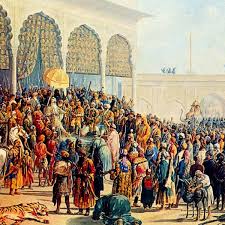
His tactical military operations, modern governance, and renovations of gurdwaras, including the Golden Temple, have left a lasting legacy as a symbol of Sikh sovereignty and regional unity in early 19th-century India.
British Days: Survival and Revival
Sikhs constitute 2% of the population yet represent 20% of the military forces. They participated in World War I, notably as part of Kitchener’s “Black Lions.” However, the loyalty demonstrated during the revolt of 1857 was significant.
The Singh Sabha, established in 1873, comprised over 100 branches that aimed to reform Sikh practices, opposing the Arya Samaj and advocating for gurdwara governance. The Akali Movement of the 1920s sought to liberate shrines, culminating in the Jaito Morcha, which resulted in approximately 2,000 arrests.
Khalsa College in Amritsar is recognized as the first modern educational institution for Sikhs.
Freedom Fighters Extraordinaire
Prominent freedom fighters from Punjab during the Indian independence movement include Lala Lajpat Rai, often referred to as the “Lion of Punjab,” who spearheaded non-violent protests against British colonial rule and succumbed to injuries sustained during a lathi charge in Lahore in 1928; Bhagat Singh, a revolutionary socialist, who detonated a bomb in the Central Legislative Assembly in 1929 as a form of protest against repressive laws and was executed by hanging at the young age of 23; and Udham Singh, who sought revenge for the 1919 Jallianwala Bagh massacre by assassinating Michael O’Dwyer in London in 1940.
1947 Partition Heartbreak
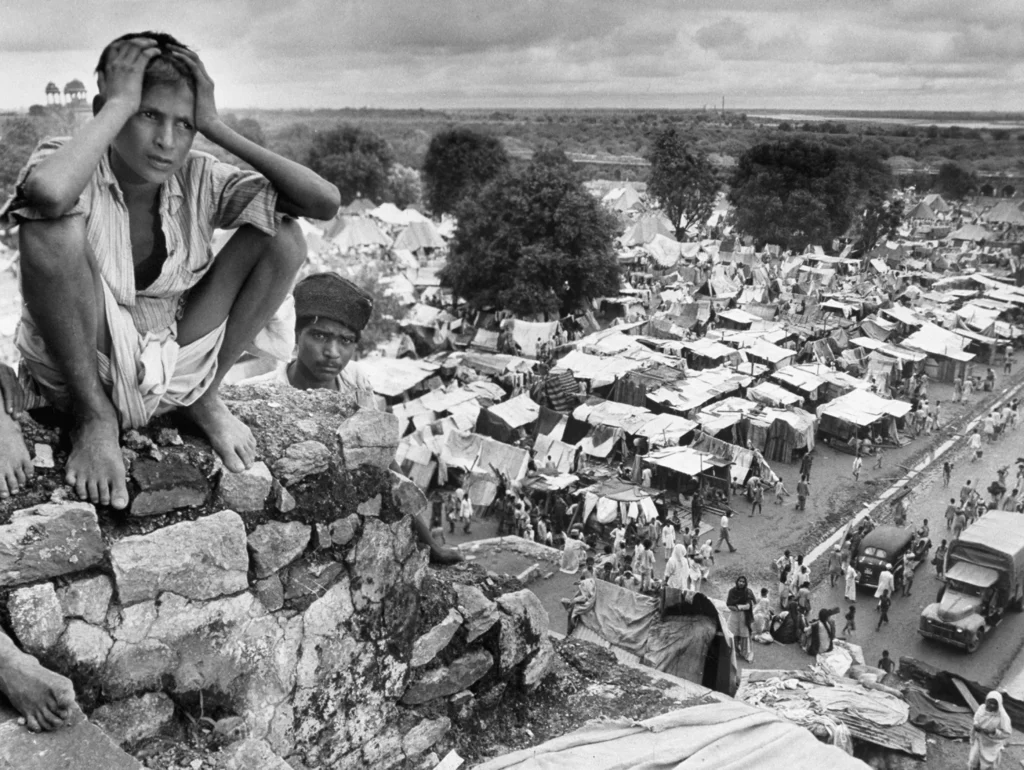
The Radcliffe Line divided Punjab in a matter of hours. An estimated 1 to 2 million people perished, and 14 million were forced to flee their homes. There were trains filled with corpses, and women resorted to jumping into wells. The Sikh community lost 40% of their land and established over 300 new towns. The resilience of refugees was evident as Patels from Lahore transformed into prominent business leaders.
Sikhs Today: Global Heroes
Diaspora: 5 million individuals reside outside India—Canada (800,000), UK (500,000). Calgary’s langar serves 5,000 people each week.
Challenges: The anti-Sikh riots of 1984 resulted in 3,000 deaths in Delhi, alongside Operation Blue Star. Nevertheless, notable figures have emerged: Indra Nooyi (Pepsi), Darshan Dhaliwal (BBC), and Jagmeet Singh (Canadian politics).
Current state of Punjab: A breadbasket due to the Green Revolution. In sports: Achievements in hockey and wrestling. In culture: Bhangra has gained global recognition, with films such as Punjab 95.
Golden Temple: Welcoming 100,000 visitors daily, offering complimentary accommodations.
Timelines and Punjab Ties
| Period | Dates | Key Events & Significance |
|---|---|---|
| Indus Valley Civilization | c. 3300–1300 BCE | Harappa in Punjab region; advanced urban planning, trade, agriculture |
| Early Vedic Period | c. 1500–1000 BCE | Punjab known as Sapta Sindhu; composition of Rigveda |
| Later Vedic Period | c. 1000–600 BCE | Formation of kingdoms; agriculture expanded |
| Persian Rule | c. 600–326 BCE | Achaemenid control; Punjab linked to Persian administration |
| Greek Invasion | 326 BCE | Alexander defeated King Porus at Battle of Hydaspes |
| Mauryan Empire | 321–185 BCE | Chandragupta & Ashoka; spread of Buddhism |
| Indo-Greek & Kushan Rule | 185 BCE–300 CE | Cultural fusion; Gandhara/Greco-Buddhist art |
| Gupta & Post-Gupta Period | c. 300–700 CE | Hindu-Buddhist learning; regional rulers |
| Hindu Shahi Dynasty | c. 700–1000 CE | Last Hindu rulers defending north-west India |
| Ghaznavid Rule | 1000–1200 CE | Mahmud of Ghazni; Lahore rises in importance |
| Delhi Sultanate | 1206–1526 | Punjab as frontier province; Islamic institutions spread |
| Mughal Empire | 1526–1707 | Lahore major capital; cultural and economic growth |
| Sikh Gurus Period | 1469–1708 | Guru Nanak to Guru Gobind Singh; formation of Khalsa |
| Sikh Misls | c. 1760–1799 | Sikh confederacies control Punjab |
| Sikh Empire | 1799–1849 | Maharaja Ranjit Singh unified Punjab |
| British Rule | 1849–1947 | Annexation after Anglo-Sikh Wars; canal colonies |
| Partition | 1947 | Punjab divided between India & Pakistan |
| Post-Independence | 1950s–present | Green Revolution; diaspora & modern politics |
Why Sikh History Lights Us Up
Sikh history is not merely a relic of the past; it is vibrant and present in every langar meal, the pride of wearing a turban, and the pursuit of justice. The teachings of Guru Nanak promote unity in the face of contemporary divisions; the bravery of the Khalsa inspires activists, including allies of Greta Thunberg. The narrative of Punjab imparts valuable lessons: practice kindness, exhibit strength, and embrace generosity. Engage with this history, embody its principles—the world requires more individuals who embody Sikh values!