Punjab has one of the most vibrant and competitive political environments in India. The political parties of Punjab have played a crucial role in shaping not only the state’s governance but also national politics. From regional powerhouses to national parties, Punjab’s political arena reflects the aspirations, struggles, and cultural identity of its people.
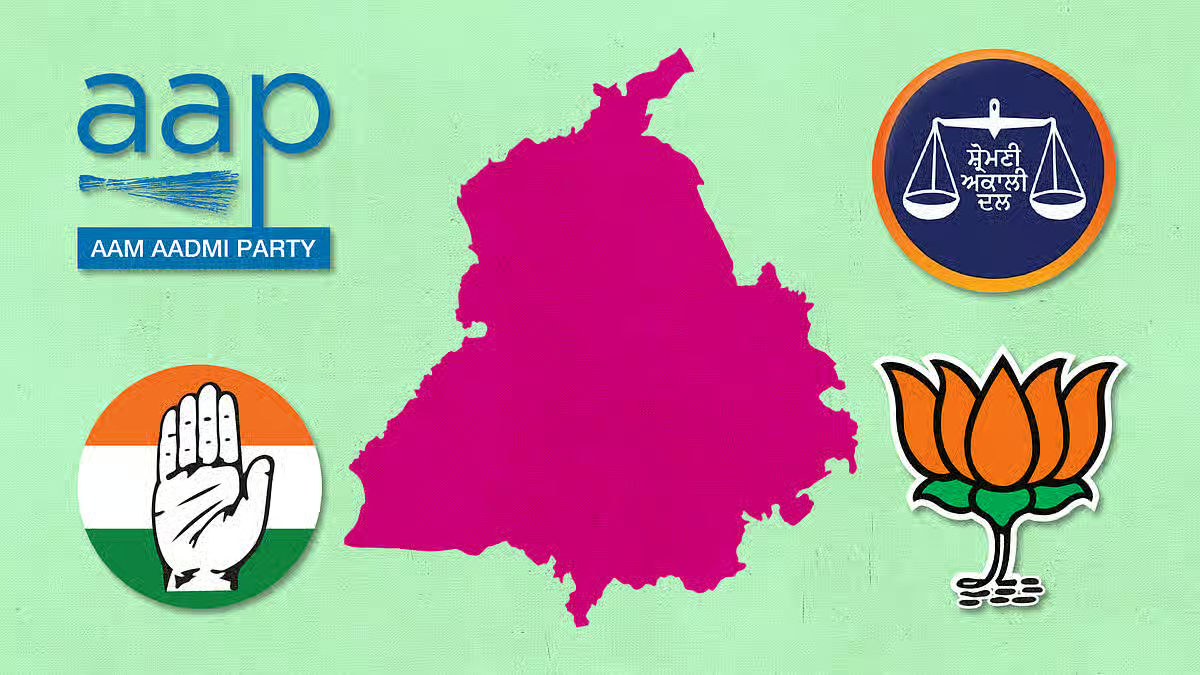
Indian National Congress (Congress)
Congress is one of the oldest political parties in Punjab. For many years, it ruled the state and was seen as a party of stability. People trusted Congress for welfare schemes, social balance, and experience in governance.
What works for Congress:
- Strong base in villages and among Dalit communities
- Long experience in running the government
- Familiar and trusted name for older voters
What doesn’t work:
- Too much internal fighting between leaders
- No clear face or long-term vision
- Weak connection with today’s youth
Today, Congress is still important but no longer dominant. If it wants to return to power, it must unite internally and speak clearly about jobs, education, and the future.
Shiromani Akali Dal (SAD)
Shiromani Akali Dal is Punjab’s oldest regional party and is deeply linked with Sikh politics and religious institutions. Earlier, many Sikhs saw SAD as the true voice of Punjab.
What works for SAD:
- Strong emotional and historical connection with Sikh voters
- Loyal support in some rural areas
- Long political experience
What doesn’t work:
- Accusations of corruption and misuse of power in the past
- Seen as controlled by one family
- Weak appeal among young and urban voters
At present, SAD is struggling to regain trust. Its future depends on honest reform, new leadership, and reconnecting with common people.
Aam Aadmi Party (AAP)
AAP is the newest major player in Punjab politics. It became popular by saying it is different from traditional parties and promises clean, honest governance.
What works for AAP:
- Strong support from youth and first-time voters
- Image of honesty and anti-corruption
- Focus on schools, health, and basic services
What doesn’t work:
- Very high public expectations
- Still learning how to manage complex rural and farm issues
- Performance in government is constantly judged
Since AAP is currently in power, people expect real results. Its future depends mainly on delivery—jobs, law and order, farmer support, and financial stability.
Bharatiya Janata Party (BJP)
BJP is very powerful at the national level but has limited influence in Punjab. Earlier, it mainly worked in alliance with Akali Dal and focused on urban Hindu voters.
What works for BJP:
- Strong national leadership
- Clear ideology and resources
- Support among business and urban middle-class voters
What doesn’t work:
- Weak independent base in Punjab
- Difficulty connecting with Sikh and rural voters
- Seen as ignoring Punjab’s regional issues
For BJP to grow in Punjab, it must build local leaders and show more understanding of Punjab’s unique culture and problems.
Small, Regional, and Independent Parties in Punjab
In Punjab, politics is not limited to big names like AAP, Congress, Akali Dal, or BJP. Alongside them, there are several small, regional, and even unrecognized but registered parties that influence specific communities, ideologies, and local areas. These parties may not always win many seats, but they play an important role in shaping political conversations and voter mood.
Active Smaller and Regional Parties
Shiromani Akali Dal (Amritsar)
Led by Simranjit Singh Mann, this party follows a strong Panthic line and openly talks about Sikh-centric issues, including the demand for Khalistan. Its support base is limited but emotionally committed, mainly around religious and ideological sentiments.
Bahujan Samaj Party (BSP)
Although a national party, BSP has a localized influence in Punjab, especially in the Doaba region. It focuses mainly on Dalit rights and social justice. In recent years, it has tried alliances, including with Shiromani Akali Dal, to stay politically relevant.
Lok Insaaf Party (LIP)
Founded by the Bains brothers, this party has influence largely in Ludhiana and nearby areas. Its politics is personality-driven and focused on local issues rather than state-wide ideology.
Shiromani Akali Dal (Sanyukt)
This party was formed through the merger of SAD (Taksali) and SAD (Democratic). It joined the NDA during the 2022 elections, aiming to offer an alternative Akali voice, though its impact remained limited.
Sanyukt Samaj Morcha (SSM)
SSM emerged after the 2020–2021 farmers’ protests, formed by various farmer unions. It tried to convert the farmers’ movement into electoral politics during the 2022 assembly elections, highlighting the difficulty of turning mass movements into political success.
Punjab Lok Congress (PLC)
Founded by former Chief Minister Captain Amarinder Singh after leaving Congress in 2021, PLC aimed to attract moderate voters. However, it later merged with the BJP in late 2022, ending its independent political journey.
Sanyukt Sangharsh Party
Led by farmer leader Gurnam Singh Charuni, this party focuses mainly on agrarian issues and farmer rights. Its influence is more movement-based than electoral.
Communist Parties (CPI and CPI-M)
The Communist Party of India and CPI (Marxist) continue to have a small but steady presence, especially in industrial belts and some rural pockets of the Malwa region. Their focus remains on labor rights, land issues, and class-based politics.
Recent Developments (2025–2026)
SAD (Waris Punjab De)
In January 2025, a new party named Shiromani Akali Dal (Waris Punjab De) was announced, with Amritpal Singh as its president. The party has stated its intention to contest the 2027 Punjab Assembly elections, adding another Panthic voice to an already fragmented space.
Internal Shifts and Uncertainty
The political environment during 2025 and early 2026 has remained relatively stable, but there has been ongoing speculation about internal differences within the ruling AAP’s Punjab unit, especially following leadership changes at the national level.
Why Small Parties Matter in Punjab
Small and independent parties highlight public anger, identity concerns, and issue-based dissatisfaction. They often raise uncomfortable questions that big parties avoid. However, lack of organization, funding, and clear governance plans limits their ability to grow.
In Punjab, these parties act less as power holders and more as pressure creators—shaping debates, dividing vote banks, and reminding major parties that ignored voices can still be heard.
Simple Comparison
Older parties like Congress and SAD depend on history and identity. Newer parties like AAP depend on performance and promises. BJP depends on national strength but struggles locally. Today’s voter is practical and wants visible results, not just speeches.
List of Punjab Assembly Constituency Names (117)
MAJHA REGION (25)
Sujanpur, Bhoa, Pathankot, Gurdaspur, Dina Nagar, Qadian, Batala, Sri Hargobindpur, Fatehgarh Churian, Dera Baba Nanak, Ajnala, Raja Sansi, Majitha, Jandiala, Amritsar North, Amritsar West, Amritsar Central, Amritsar East, Amritsar South, Attari, Tarn Taran, Khem Karan, Patti, Khadoor Sahib, Baba Bakala.
DOABA REGION (23)
Bholath, Kapurthala, Sultanpur Lodhi, Phagwara, Phillaur, Nakodar, Shahkot, Kartarpur, Jalandhar West, Jalandhar Central, Jalandhar North, Jalandhar Cantt., Adampur, Mukerian, Dasuya, Urmar, Sham Chaurasi, Hoshiarpur, Chabbewal, Garhshankar, Banga, Nawanshahr, Balachaur.
MALWA REGION (69)
Anandpur Sahib, Rupnagar, Chamkaur Sahib, Kharar, S.A.S. Nagar, Dera Bassi, Ludhiana East, Ludhiana South, Atam Nagar, Ludhiana Central, Ludhiana West, Ludhiana North, Gill, Payal, Dakha, Jagraon, Khanna, Samrala, Sahnewal, Raikot, Amargarh, Nihal Singhwala, Bhagha Purana, Moga, Dharamkot, Zira, Firozpur City, Firozpur Rural, Guru Har Sahai, Jalalabad, Fazilka, Abohar, Balluana, Lambi, Gidderbaha, Malout, Muktsar, Faridkot, Kotkapura, Jaitu, Rampura Phul, Bhucho Mandi, Bathinda Urban, Bathinda Rural, Talwandi Sabo, Maur, Mansa, Sardulgarh, Budhlada, Lehra, Dirba, Sunam, Bhadaur, Barnala, Mehal Kalan, Malerkotla, Dhuri, Sangrur, Nabha, Patiala Rural, Rajpura, Ghanaur, Sanour, Patiala, Samana, Shutrana.
Future of Punjab Politics: What Can We Expect?
1. Work matters more than words
People now vote based on performance. Governments that fail to deliver will be quickly questioned.
2. Youth will decide elections
Unemployment and migration have made young voters restless. Any party that seriously addresses these issues will gain support.
3. Identity alone is not enough
Religion and regional pride are important, but they cannot win elections by themselves anymore.
4. Old parties must change or fade
Congress and Akali Dal can return only if they reform themselves and bring fresh leadership.
5. Competitive politics will continue
Punjab is unlikely to be ruled by one party for decades again. The future will remain competitive and unpredictable.
Strong Opinion Angle: Why Punjab Politics Needs a Reset
Punjab does not suffer from a lack of political parties; it suffers from a lack of political seriousness. For decades, elections have revolved around personalities, emotions, past glory, or fear of the other party. Meanwhile, real issues—youth unemployment, drug abuse, collapsing agriculture incomes, migration, and weak industry—have continued to grow.
The biggest problem is not who rules Punjab, but how politics is practiced. Governments often focus more on winning the next election than fixing long-term problems. Short-term freebies replace long-term planning. Promises are made loudly, but accountability fades quietly.
Punjab needs a political reset where:
- Governance is measured by data and outcomes, not slogans
- Youth are seen as assets to build the state, not voters to distract
- Farmers are supported with sustainable solutions, not temporary relief
- Leaders are accessible, answerable, and grounded in Punjab’s reality
Voters too must change. Blind loyalty to any party—old or new—only weakens democracy. Asking tough questions, demanding transparency, and voting based on performance is the real power of the public.
Conclusion
Punjab’s politics is at a turning point. The era of unquestioned dominance by any single party is over. The future will belong to those who combine cultural understanding with honest governance and economic vision. If both leaders and voters accept this reset mindset, Punjab can move from political noise to political progress. Otherwise, the cycle of disappointment will simply repeat under new names.
0 Comments