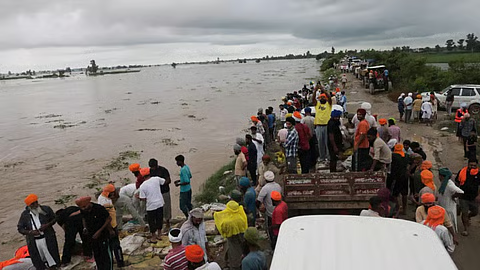
Punjab — once known as “the Land of Five Rivers” — is facing one of its most severe floods in nearly 40 years.
All 23 districts are affected, 3.8 lakh people displaced, and over 11.7 lakh hectares of farmland destroyed.
This calamity has once again sparked debates on why floods continue to devastate Punjab and how poor management turns natural monsoons into annual disasters.
What Are the Causes of Flooding in Punjab?
Punjab’s floods result from both natural factors and human-induced failures — a dangerous mix that magnifies the damage.
Natural Causes of Punjab Floods
1. Heavy and Erratic Monsoon Rains
The 2025 monsoon brought 45% excess rainfall across catchment areas in Himachal, Jammu & Kashmir, and Punjab.
Sudden cloudbursts led to rivers swelling beyond capacity, triggering flash floods.
2. Geographical Vulnerability
Punjab’s lifeline rivers — Ravi, Beas, and Sutlej, along with Ghaggar and smaller choes — make the state fertile yet flood-prone.
It produces nearly 20% of India’s wheat and 12% of rice, but its geography makes it naturally vulnerable.
- 3. Climate Change & Extreme Weather
As per IPCC’s AR6 Report, erratic monsoon patterns are making floods more frequent and intense.
What once nourished Punjab’s fields now destroys them.
Major Flood Years: 1955, 1988, 1993, 2019, 2023 — and now 2025.
Human-Induced Factors
1. Poor Dam and Reservoir Management
Dams like Bhakra, Pong, and Thein/Ranjit Sagar release water abruptly when levels rise.
In 2025, inflows at Pong were 20% higher than in 2023, leading to sudden water releases that inundated villages downstream.
2. Lack of Flood Cushion
The Bhakra Beas Management Board (BBMB) maintains high storage levels for power and irrigation in July–August, leaving no buffer for heavy rains later.
3. Barrage Failures & Structural Weakness
In August 2025, two gates of Madhopur Barrage on the Ravi River failed after abrupt releases, worsening floods.
4. Weak Embankments & Illegal Mining
Unregulated sand mining and poor embankment maintenance have weakened Punjab’s flood protection infrastructure.
Drainage canals remain clogged and unmaintained.
5. Governance & Coordination Gaps
Coordination failures between the Centre-controlled BBMB, Punjab’s irrigation authorities, and disaster agencies delay warnings and response efforts.
6. Urbanization & Deforestation
Encroachments on riverbanks, deforestation, and construction on floodplains have reduced the state’s natural flood buffers.
The Supreme Court and NGT have already flagged illegal tree felling as a contributor to floods and landslides.
Key Challenges in Punjab’s Flood Management
Governance-Related Issues
- Centralized Control: Punjab has limited say in dam operations.
- Reactive Response: Flood management starts after the disaster.
- BBMB Amendment 2022: Allowing non-Punjab officers in BBMB leadership has strained coordination further.
Infrastructure Gaps
- Weak embankments and outdated drainage systems worsen flooding, especially in Malwa region.
- Strengthening riverbanks and desilting rivers would cost ₹4,000–₹5,000 crore — still pending.
- Climate change is making rainfall patterns unpredictable, challenging old flood plans.
Impact of the 2025 Punjab Floods
1. Agricultural Destruction
Over 4 lakh acres of farmland submerged.
Paddy and basmati crops have been hit hard, with reduced quality and falling below MSP rates.
Soil erosion and silt deposits have made replanting difficult, threatening Punjab’s role as India’s food bowl.
2. Economic Fallout
Farmers face severe financial distress and growing debt.
Roads, canals, and irrigation infrastructure need major repairs, increasing state fiscal burden.
3. Health and Environmental Impact
Floodwaters from polluted rivers like Buddha Dariya in Ludhiana have caused “black floods,” mixing industrial waste with rainwater.
This has led to waterborne diseases such as cholera, typhoid, hepatitis A, and vector-borne illnesses like dengue and malaria.
Long-term soil and groundwater contamination are major risks.
4. Humanitarian Crisis
Thousands of families displaced.
Women, children, and elderly are facing shortages of food, safe drinking water, and shelter.
Relief operations continue but are hindered by poor connectivity and coordination.
What Can Be Done? | Measures to Prevent Floods in Punjab
1. Scientific Dam Management
- Revise BBMB “rule curves” to factor in rainfall forecasts.
- Maintain flood cushion during peak monsoon months.
2. Strengthen Embankments & Drainage
- Reinforce dhussi bundhs (earthen embankments).
- Use satellite monitoring to curb illegal sand mining.
- Regularly desilt canals and clear drainage channels.
3. Integrated Flood Management
- Improve Centre–State coordination on water releases.
- Implement C-FLOOD and BHUVAN systems for real-time data and local alerts.
4. Community-Based Preparedness
- Form village disaster committees.
- Conduct mock drills and digital alerts.
- Involve Krishi Vigyan Kendras (KVKs) for farmer training on flood adaptation.
5. Climate-Resilient Infrastructure & Crops
- Build modern urban drainage networks.
- Restore wetlands to absorb excess rainfall.
- Promote flood-tolerant crop varieties and diversify agriculture beyond paddy.
Conclusion
Punjab’s geography makes it naturally flood-prone — but human negligence, mismanagement, and weak governance amplify the damage.
Floods that should be manageable have become human-made disasters.
A resilient Punjab needs:
Data-driven dam management
Transparent governance
Investment in embankments and drainage
Climate-smart farming and community awareness
Only then can Punjab truly protect its people and reclaim its title as “India’s food bowl.”
ALSO READ: PUNJAB LOTTERY

0 Comments